


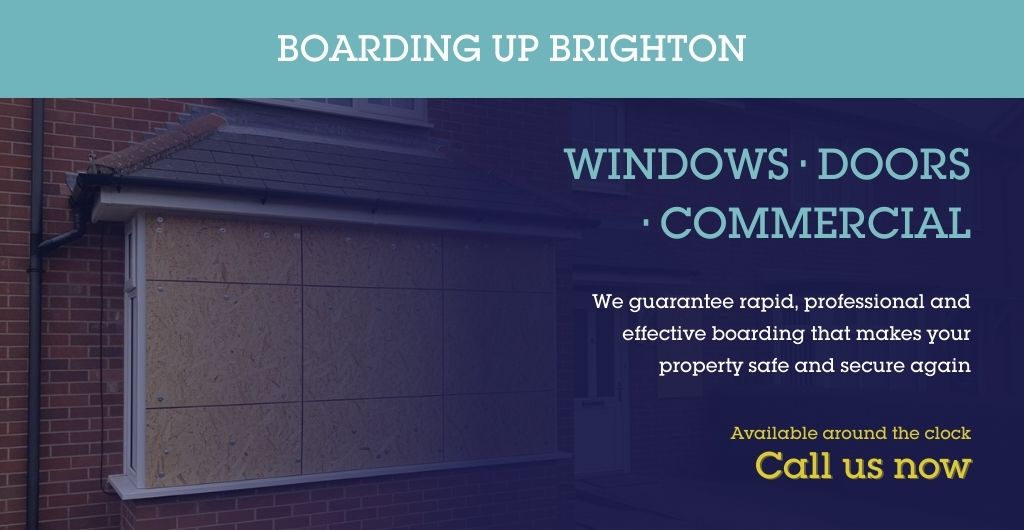
Residential boarding up in Brighton (BN1–BN88)
Residential break-ins, storm damage and accidents have a nasty habit of happening at the worst possible time—late at night, just before a trip away, or when you’ve got tenants due to move in. If you need residential boarding up in Brighton, we help homeowners, landlords and managing agents secure houses, flats and maisonettes across the BN postcode area so the property is safe, weathered, and not inviting further attention.
We’re used to Brighton’s mix of housing stock—from Regency and Victorian terraces around Kemptown and Hanover, to 1930s semis in Patcham and Hove, to modern flats by Brighton Marina. The right approach depends on the opening, the condition of the frame, and whether the home will be occupied.
If your situation is urgent, see emergency boarding up for out-of-hours help.
When residential boarding up is needed (typical Brighton scenarios)
Most domestic call-outs fall into a few common patterns. The details vary, but the priorities are the same: secure the opening, reduce risk of further damage, and make the home safe to leave (or safe to stay in).
Break-ins and attempted break-ins
Forced entries in residential areas often mean:
- Smashed panes in uPVC or timber frames
- Punched holes in double glazing
- Doors split around the lock or hinges
- Rear access points targeted (side passages, garden doors)
After a burglary, we’ll usually recommend a security-first fix using anti-tamper fixings where possible, particularly if the property is empty overnight. If the frame is too damaged for non-destructive boarding methods, we’ll explain options before proceeding.
Related guidance: boarding up after a burglary.
Storm damage on exposed streets and coastal edges
Brighton’s sea winds and winter gales can turn a loose panel, fence section or tile into a problem fast—especially in more exposed places like Rottingdean, Saltdean, Peacehaven, and properties up on the downland edges near Woodingdean or Falmer.
Storm-related residential work commonly includes:
- Boarding cracked or blown-in windows
- Securing damaged doors that no longer latch
- Temporary weatherproofing to reduce rain ingress
See storm damage boarding if wind or debris has left an opening vulnerable.
Accidental impact (inside and out)
Accidents happen: a ball through a living-room window, a slip with a ladder, or a vehicle clipping a garden wall and window on a tight street.
If there’s an immediate safety risk (sharp glass, a hole at ground level, an unsecured entry), boarding up is the quickest way to stabilise things until the proper repair is arranged. More on that here: accident damage securing.
Fire and smoke incidents (securing only)
After a small kitchen fire or a more serious incident, windows and doors may be compromised by heat, water, or forced entry during firefighting. Our role is to secure the property—we’re not a fire restoration company, and we don’t provide smoke/odour remediation, but we can board openings and help prevent further loss.
See boarding up after fire damage.
Flooding and water-damaged frames
After leaks or flooding, timber can swell and uPVC doors can drop out of alignment. Sometimes the opening won’t close or lock properly even if the glass is intact. We can secure the property until repairs are completed, and we’ll also flag when ventilation gaps are sensible (for drying) without compromising security.
The residential property types we regularly secure in Brighton
Brighton isn’t one-size-fits-all, and neither is boarding up. We tailor the method to the building, access and the risks.
Flats and maisonettes (including communal entrances)
From converted Victorian houses around Seven Dials and Preston Park, to blocks near London Road and Lewes Road, flats bring extra considerations:
- Controlled access and entry systems
- Communal hallways and shared freehold responsibilities
- Noise and working-hour sensitivity (especially evenings)
If the damaged opening is not on the ground floor, we’ll talk through safe access (including whether internal boarding is more appropriate).
Houses (terraces, semis and detached)
Terraces in central Brighton can have:
- Narrow frontages and bay windows
- Limited parking/loading space
- Rear access via alleyways (handy for us, handy for opportunists too)
1930s semis and post-war homes (common in parts of Patcham, Withdean, and Hollingbury) often have larger window openings and mixed materials (timber, uPVC, rendered masonry), which affects fixing choices.
Student lets and HMOs
Areas around Moulsecoomb and the university routes can involve:
- Frequent changeovers between tenancies
- Managing agent coordination
- Need for clear documentation for deposits and claims
We can work with landlords and agents to secure the property quickly and provide the paperwork typically needed.
How we board up residential windows (materials and methods)
When people search for “board up Brighton” they often imagine any sheet of wood and a handful of screws. In reality, proper residential boarding is about choosing the right material, fitting method and fixings so it’s secure and safe.
Plywood vs OSB: what we use and why
We typically use:
- 18mm exterior-grade plywood for strength, durability and better weather resistance (common choice for ground-floor openings or longer durations)
- 12mm OSB for smaller openings or where short-term securing is appropriate
We’ll advise what’s suitable based on:
- Opening size and location (front elevation vs rear)
- Whether the home will be occupied
- Likelihood the board needs to stay in place for days vs weeks
Service detail: window boarding in Brighton.
Fixing methods for homes
We aim to secure boards firmly while avoiding unnecessary damage.
Common approaches include:
- Reveals and baton fixing where the window reveal allows a neat, strong fit
- Through-bolting with spreader plates when extra strength is required (especially for larger panes or repeated targeting)
- Anti-tamper fixings where the board could otherwise be removed from outside
If the surrounding frame is crumbling, rotten, or already split, we’ll explain what’s realistic. Sometimes “non-destructive” isn’t possible if there’s nothing sound to fix into—but we won’t proceed without talking it through.
Securing residential doors: boarding vs temporary steel doors
A damaged front or back door isn’t just an entry risk—it’s also a safety risk for the people inside.
Depending on the damage, we may use:
- Door boarding for immediate securing when the door leaf is compromised or glass panels are broken
Learn more: door boarding in Brighton - Temporary steel doors where a door has been forced badly, the frame is unreliable, or the property is likely to remain vacant for a period
(We’ll advise whether this is appropriate for a lived-in home and what access you’ll need.)
In residential settings, we’ll always discuss:
- Whether you need to re-enter the property regularly
- Safe egress (you must be able to exit safely)
- The balance between ventilation and security
Rooflights, skylights and upper openings in period homes
Brighton has plenty of loft conversions, rooflights and flat-roof extensions—especially in terraces and conversions. Damage up high can quickly turn into water ingress, stained ceilings and plaster damage.
If you have a compromised rooflight/skylight or an opening that’s letting in weather, we can help with roof and skylight boarding where safe access is available.
See: roof boarding in Brighton.
What to expect when you call us for residential boarding up
When you’re stressed, the process needs to be straightforward.
- You tell us what’s happened (burglary, storm, accident) and the type of property (house/flat/maisonette).
- We ask a few practical questions: opening size, floor level, access/parking constraints, whether the home is occupied, and any immediate hazards.
- We attend and secure the opening using a suitable board thickness and fixing method.
- You receive documentation (typically an itemised invoice and a short work statement). If useful for insurers or landlords, we can provide time-stamped photos of the secured opening.
We don’t quote fixed arrival times—traffic and the nature of emergency work vary—but we prioritise urgent safety and security risks.
For urgent assistance, go straight to emergency boarding up.
Practical tips before we arrive (if it’s safe)
If you’re dealing with a broken window or door, a few sensible steps can help—only if you can do them safely:
- Keep people and pets away from broken glass; don’t try to clear shards in the dark
- If the police attended, keep your crime reference number
- Take a few photos from a safe distance (useful for insurers and landlords)
- If you can, move valuables away from the affected room
- Avoid touching damaged locks/frames that may be sharp or unstable
If there’s any risk (suspicious persons nearby, unstable glass, exposed electrics), step back and call for help.
Insurance and residential boarding up (what we can and can’t do)
Residential customers often ask whether boarding up is covered by insurance. Policies differ, and we’re not loss adjusters or legal advisers—but we can support your claim by providing the sort of evidence insurers typically request:
- Clear description of works carried out
- Date/time of attendance
- Photos showing the secured opening
- Itemised invoice for your records
More guidance here: insurance claims support, and if you’re cost-checking, see boarding up pricing (we don’t publish fixed prices because every opening and access situation is different).
Residential work across Brighton and the wider BN area
We cover Brighton and surrounding BN postcodes (BN1–BN88). Residential call-outs regularly include:
- Central Brighton neighbourhoods like Kemptown, Preston, and Hollingbury
- Coastal and clifftop communities like Rottingdean and Saltdean
- Nearby towns and villages across the wider BN area where properties may be left unattended
If you’re unsure whether you’re in range, start with areas we cover or contact us directly.
FAQs: residential boarding up in Brighton
How long does residential boarding up take?
It depends on the number of openings, access (especially for flats), and the condition of the frames. A single standard window is usually straightforward; larger bays, awkward rear access in terraces, or badly damaged frames take longer. If you tell us what’s happened, we’ll give a realistic expectation before we attend.
Can you board up a window in a flat near Brighton Station or Seven Dials?
Yes—flats around Brighton Station and Seven Dials are common, including conversions with shared entrances. The key factors are access, any building management rules, and whether the opening is above ground floor. We’ll talk through the safest approach and whether internal boarding is preferable.
Will boarding up damage my window frame?
We aim to minimise damage, but security has to be reliable. If the frame is sound, we can often fix in a controlled way (for example using reveal methods). If the frame is already split/rotted or crumbling masonry is present, some additional fixing impact may be unavoidable—if so, we’ll explain why before we proceed.
Do you work with landlords and managing agents?
Yes. We regularly help landlords, letting agents and block managers secure residential properties between tenancies or after incidents. We can provide photos and paperwork suitable for maintenance records and insurance conversations.
What’s the difference between boarding up and a security screen for a home?
Boarding (plywood/OSB) is often the quickest way to secure a broken opening short-term. Security screens are typically more “medium-term” and are more common on vacant properties. If you’re dealing with an empty house or a long repair timeline, see vacant property boarding up.
Helpful links
- emergency boarding up
- window boarding in Brighton
- door boarding in Brighton
- roof boarding in Brighton
- boarding up pricing
- areas we cover
Ready to get started? Call 01273 092 166 or email us for a free, no-obligation quote.
