


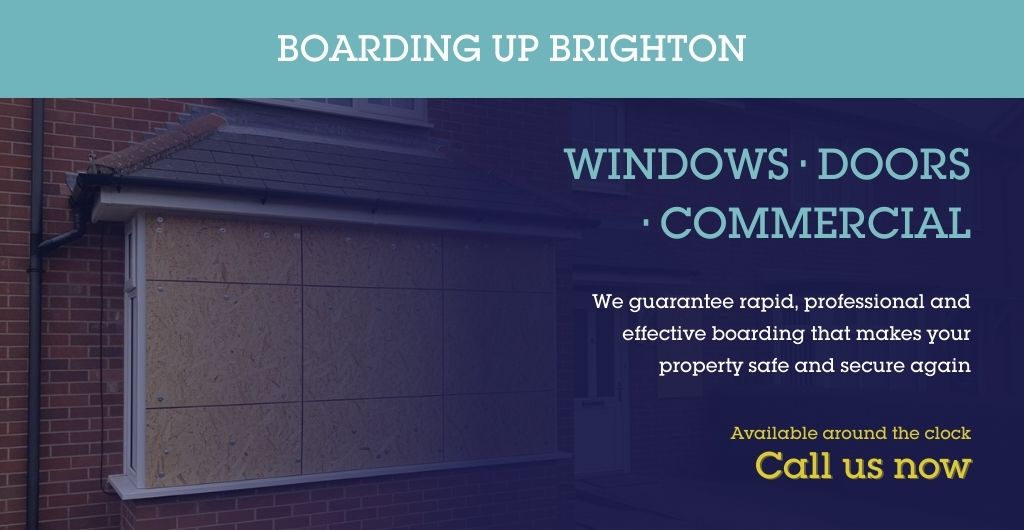
Fire damage boarding up in Brighton (BN) – secure your property after a fire
Fire damage is upsetting, exhausting, and often chaotic. Once the flames are out and everyone is safe, the next urgent problem is security: broken windows, forced doors, missing panels, and holes created for ventilation can leave your home or business wide open.
Boarding Up Brighton provides fire damage boarding up in Brighton and across the BN postcode area (BN1–BN88)—securing the building quickly and sensibly so you can focus on insurers, temporary accommodation, or getting your business back on its feet.
If you need urgent help today or out of hours, use our emergency boarding up service or call now: Call 01273 092 166.
When fire damage boarding up is needed
Not every fire leaves obvious “front-of-house” damage. Often, the building becomes vulnerable because of necessary actions taken during the incident or because heat and water have compromised frames and fixings.
We’re commonly called out after:
- Fire service entry: doors forced for access, locks destroyed, or panels cut away to ventilate smoke.
- Broken glazing: heat cracks glass, or windows are broken during response.
- Garage or kitchen fires: often contained to one area, but still leave external doors/windows damaged.
- Flat fires in converted buildings: communal entrances, stairwell windows, or internal fire doors may be damaged.
- Commercial premises incidents: cafés, pubs, and small shops where front glazing or rear access doors become insecure.
In Brighton, this can look very different depending on the building. Regency and Victorian terraces around Kemptown and Hanover often have tall sash windows and narrow access. In Hove and Aldrington, you may have large bay windows and garden-level entrances. Around London Road, North Street, and Western Road, fire damage sometimes affects shopfront glazing and rear service doors, where security is a priority overnight.
First steps after a fire (practical guidance)
If you’re reading this right after an incident, here are sensible next steps. Only do what’s safe—if in doubt, wait for the all-clear.
- Make sure everyone is safe and follow instructions from the fire service and police.
- Do not re-enter if you’ve been told not to. Smoke and structural risks aren’t always obvious.
- Take photos from a safe position (outside, if possible). This helps with insurers and landlords.
- Keep key details: incident number, any police reference number, and the name of the attending station/crew if provided.
- Call your insurer early. You don’t need a full quote before reporting the loss.
- Arrange securing if doors/windows are compromised. If the property will be empty overnight, treat it as urgent.
We’re not loss adjusters and we don’t provide fire restoration or smoke/odour remediation. Our role is straightforward: secure the vulnerable openings and help you document what was done for your claim.
For the fastest help, contact our emergency boarding up team: Call 01273 092 166.
What “securing the property” means after fire damage
Fire scenes are rarely neat. Heat, water, soot, and forced entry can make standard repairs impossible on the first visit. Our aim is to leave your property closed, protected, and resistant to opportunistic entry, while keeping things practical for insurers and future trades.
Depending on what’s damaged, securing may include:
- Boarding broken windows (including large panes, ground-floor bays, and rear windows)
- Boarding or stabilising damaged doors where the lock area is destroyed
- Shopfront boarding for commercial glazing and wider openings
- Temporary steel door installation where timber doors/frames have failed and the building needs medium-term security
- Rooflight/skylight boarding where overhead glazing has failed or been removed
You can read more about each method here:
- window boarding in Brighton
- door boarding in Brighton
- shopfront boarding in Brighton
- roof boarding in Brighton
How we board up fire-damaged windows (and why we do it this way)
Fire damage often leaves glass cracked but still in place, or shattered with jagged edges held by the beading. Frames can be softened or warped by heat, and water ingress can swell timber.
Our approach is to secure the opening without making later glazing work harder than it needs to be.
Materials we typically use
- 18mm exterior-grade plywood for most ground-floor and higher-risk openings (strong, reliable, good screw-holding)
- 12mm OSB for smaller/low-risk windows or internal openings where appropriate
We choose the material based on the opening size, exposure, and risk. If a property is likely to be unoccupied, we’ll advise on the more robust option.
Fixing method (non-destructive where possible)
Where frames are sound enough, we use non-destructive or low-impact fixing methods, and we’ll discuss fix points before we start. When frames are too damaged (common after intense heat), we may need to secure to surrounding structure—if that’s the case, we’ll explain the options first.
We also use anti-tamper fixings when the board could otherwise be removed from outside. That matters if your property is empty or in a busy footfall area—think around Brighton Station, St James’s Street, or near the seafront where people pass late into the night.
Securing fire-damaged doors: boarding vs temporary steel doors
A door that’s been forced or burned is often the biggest risk point for burglary after a fire—especially if the property can’t be occupied immediately.
When door boarding makes sense
Door boarding is appropriate when:
- the door leaf is damaged but the structure still provides a solid fixing point
- it’s a short-term measure while a locksmith, joiner, or insurer arranges repairs
- access will still be needed soon and you’re coordinating multiple trades
See: door boarding in Brighton
When we recommend a temporary steel door
A temporary steel door is often a better fit when:
- the original door/frame is too compromised to board safely
- the building will be unoccupied for days or weeks
- insurers require robust “make safe” measures for vacant premises
Steel doors provide a more secure, usable entry point than a fully boarded doorway, and they can be critical for sites needing controlled access.
If you’re unsure, call and describe what’s happened—photos help if you can safely take them.
Call 01273 092 166
Shopfronts and commercial sites after fire damage
Commercial fire incidents can create awkward openings: large panes, double doors, side returns, and rear access routes. In Brighton, that might be a small unit off Western Road, a café near The Lanes, or a business unit with a service entrance closer to the A270 corridor.
For shops, restaurants, and offices, we can:
- board up large shopfront glazing using appropriately sized sheets and secure fixings
- reduce visual impact where possible (neat, flush boarding rather than patchwork)
- help keep the premises secure until glazing contractors can re-measure and replace
If your premises needs to be secured quickly, start with shopfront boarding in Brighton or contact our emergency line: Call 01273 092 166.
Rooflights and skylights: the overlooked vulnerability after a fire
Fire and heat can crack roof glazing, and in some incidents rooflights are removed or broken during response. Even a small opening can cause big problems: rainwater ingress, wind damage, and easy access for intruders.
We provide roof boarding in Brighton for:
- skylights on flat roofs (common on extensions)
- rooflights on converted lofts
- overhead openings in commercial units
Access and safety come first. If the roof is unstable or access is unsafe, we’ll tell you plainly and discuss alternatives (for example, securing from inside where possible, or waiting until the structure is confirmed safe).
A realistic local example (micro case study)
A landlord in BN1 called after a small kitchen fire in a converted flat near Seven Dials. The fire was contained, but the front door had been forced for access and a rear sash window had cracked from heat. The tenant had to stay elsewhere overnight, leaving the flat vulnerable.
We attended to:
- board the rear window using exterior-grade plywood and secure fixings
- secure the entry point with a robust temporary solution (based on the condition of the door and frame)
- provide time-stamped photos and an itemised invoice for the landlord’s insurer and managing agent
It wasn’t a “full repair”—it was a safe, documented make-secure that allowed the claim and follow-on works to proceed.
What you get from Boarding Up Brighton
We try to make the aftermath less stressful by being clear, tidy, and properly documented. After fire damage boarding up, customers typically receive:
- A clear description of what was secured and how
- Time-stamped photos of boarded openings (useful for insurers and agents)
- An itemised invoice and work statement for your records
- Practical advice on whether a stronger measure (like a steel door) is sensible
For more on documentation and claims, see insurance claims help for boarding up.
Fire damage and insurance: what we can (and can’t) help with
Most insurers want you to take reasonable steps to prevent further loss—securing broken openings is usually part of that. We can support your claim with clear paperwork and photos.
What we can’t do:
- approve claims or speak as your loss adjuster
- certify a building as structurally safe
- remove smoke smell or perform restoration cleaning
If you’re dealing with a managing agent, housing association, or facilities team, we’re used to providing the documentation they need to keep things moving.
FAQs: fire damage boarding up in Brighton
How quickly should I board up after a fire?
As soon as you know doors or windows can’t be secured normally—especially if the property will be empty overnight. Even “small” damage can attract opportunistic entry, particularly in busy areas around the city centre and near the seafront.
If it’s urgent, use emergency boarding up and call: Call 01273 092 166.
Can you board up if the window frame is heat-damaged?
Often yes, but the method may change. If the frame won’t take fixings safely, we’ll explain the options before doing any work. Our priority is a secure, safe installation that doesn’t create extra hazards.
Will boarding up stop rain getting in?
Boarding significantly reduces exposure, but it isn’t the same as a full rebuild or roof repair. We aim to cover openings neatly and securely; if there’s extensive roof damage or ongoing water ingress, we’ll be honest about what boarding can and can’t achieve.
Do you cover commercial properties in Brighton and BN postcodes?
Yes—homes, flats, shops, offices, and mixed-use buildings across Brighton & Hove and the wider BN area. Commercial sites often need shopfront boarding in Brighton or robust door security.
I’m in Brighton Marina / Kemptown—can you help here?
Yes. We regularly work across BN2, including Kemptown and the Marina area, where exposed coastal conditions can make quick securing even more important after fire damage.
For a full list, see areas we cover.
Next step: secure the building, then deal with the rest
After a fire, you shouldn’t have to worry about someone walking in through a broken window or a compromised door. We’ll help you get the property secured properly, with clear documentation for the next stages.
Need help now? Call 01273 092 166 for immediate assistance.
Or email: info@boarding-up-brighton.co.uk
