


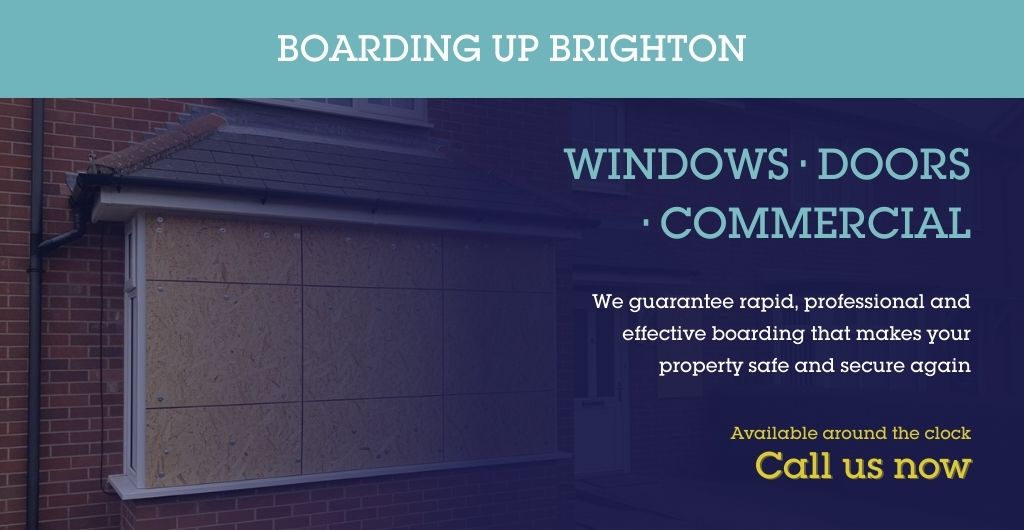
Flood damage boarding up in Brighton (BN1–BN88): securing your property after a leak or flooding
Flooding is stressful, messy and often sudden. Whether it’s a burst pipe in a converted flat off Western Road, surface water after heavy rain in Patcham, or tidal seepage affecting a ground-floor space near Brighton Marina, the priority is the same: make the property safe, secure and weather-tight enough to prevent further damage and reduce the risk of theft.
Boarding Up Brighton provides flood damage boarding up in Brighton and across BN postcodes (BN1–BN88). We don’t do drying, dehumidifying or full restoration works—but we do secure damaged windows, doors, shopfronts and other openings so you can stabilise the situation and move forward with insurers, landlords or managing agents.
If you need urgent help, call 01273 092 166 or email info@boarding-up-brighton.co.uk.
When flood damage boarding up is needed (and when it isn’t)
Flood damage doesn’t always look dramatic from the outside. In Brighton’s mix of basement flats, period terraces and commercial units, water can quietly compromise frames and fixings until something gives.
You’ll usually need boarding up or temporary security when:
- A door won’t close or lock because timber has swollen, hinges have shifted, or the frame has racked.
- Glazing is cracked from impact or movement (common after waterlogged frames expand).
- A shopfront has been compromised and you can’t leave it overnight unsecured.
- A ground-floor window is now vulnerable (frame softened, beads loosened, or pane missing).
- You’ve had to remove a door or window temporarily for safety or access, leaving an open elevation.
- A vacant/void property has been flooded and you need to prevent opportunistic entry while it’s assessed.
You may not need boarding up if:
- The openings are intact and locking securely, and there’s no sign of frame movement.
- The damage is purely internal (e.g., flooring, plaster, electrics) and security hasn’t been affected.
If you’re unsure, call 01273 092 166—we’ll talk through what’s happened and advise whether boarding up is actually required. We’d rather be straight with you than sell you something unnecessary.
First steps after a flood (practical guidance)
If it’s safe to do so, these steps can reduce further loss before we arrive:
-
Make the area safe
If water has reached sockets, consumer units, or appliances, avoid switching anything on. If you’re in a block, inform the managing agent/building manager. -
Stop the source if possible
Turn off the stopcock for a burst pipe or isolate the appliance. If the flooding is external, focus on safety and containment. -
Take photos and notes
Wide shots, close-ups, and anything showing the cause (e.g., failed pipe, overflowing guttering). Insurers often ask for this later. -
Ventilate where appropriate
If security allows, opening windows can help reduce condensation. If it doesn’t, we can secure openings in a way that still considers airflow (case-by-case). -
Keep key details ready
Property address, access instructions, and any insurer claim reference if you already have one.
We’re not loss adjusters or legal advisors, but we can provide the documentation insurers typically need (see below).
How we secure flood-damaged properties in Brighton and the BN area
Flood damage creates a specific challenge: wet timber and distorted frames can make “normal” repairs impossible in the short term. Our job is to secure the building without making the situation worse.
1) On arrival: assess access, safety and the condition of the openings
Flooded properties can have hidden risks—soft frames, loose sashes, or doors that look shut but won’t hold if pushed. We’ll inspect:
- Whether the door/window is structurally sound enough for a non-destructive boarding method
- The condition of frames and surrounding masonry
- Any signs of movement (swelling, racking, failed fixings)
- How best to secure the opening while avoiding trapped water where possible
If the frame is too damaged for non-destructive methods, we’ll explain your options before proceeding.
2) Choose the right method and material (plywood vs OSB, fixings, and approach)
For most flood-related callouts, we use:
- 18mm exterior-grade plywood for robust, secure protection on larger or more vulnerable openings
- 12mm OSB for smaller windows or where a shorter-term, cost-sensitive solution is appropriate
We use fixings appropriate to the substrate and situation. Where a property will be unattended, we’ll often recommend anti-tamper fixings so the board can’t simply be removed from outside.
For window-specific work, see: window boarding in Brighton
For entry points that won’t secure, see: door boarding in Brighton
3) Secure the opening—without relying on compromised frames
With flood damage, frames may be swollen or softened. Depending on what we find, we may:
- Fix boards in a way that spans sound structure rather than relying on rotten/saturated timber
- Use internal bracing methods where appropriate (access-dependent)
- Create a tight, secure coverage that reduces wind-driven rain intrusion while you organise repairs
If ventilation is a concern (common after flood damage), tell us. In some cases, a fully sealed board-up may not be ideal for drying, but leaving the property insecure isn’t an option either. We’ll help you balance security and practicality.
4) For longer-term issues: consider temporary steel doors or security screens
If a flood has left a door beyond use—particularly in a vacant property or a commercial unit waiting on joinery/glazing lead times—boarding up can be a short-term fix. For medium-term security, we may recommend:
- Temporary steel doors where an entrance must be secure and frequently accessed
- Security screens for void properties where repeated attempts at entry are a risk
These options can reduce repeat callouts where wet damage has delayed permanent repairs.
If you’re managing a void property after flooding, see: vacant property boarding up in Brighton
Common flood scenarios we see locally (Brighton & BN postcodes)
Flood-related callouts vary depending on the building type and location:
- Basement and lower-ground flats around areas like Kemptown and parts of Hove: water ingress can affect timber surrounds, and exits may become hard to secure.
- Converted period properties (Regency/Victorian stock): older frames can swell and distort quickly when saturated.
- Commercial units near busy routes like Lewes Road or around London Road shopping area: damage to doors and shopfront glazing becomes a security problem fast, especially out of hours.
- Coastal exposure in places such as Saltdean, Rottingdean, Shoreham-by-Sea and Peacehaven: wind-driven rain and salt air can compound issues, and temporary protection needs to be robust.
We cover Brighton & Hove and the wider BN area—if you’re outside the city centre, we can still help across the postcode region. For general coverage, see: areas we cover
Micro case study: securing a flooded ground-floor flat in BN2
A resident in a ground-floor flat near Sussex Square (Kemptown, BN2) had a significant internal leak while away. By the time it was discovered, the rear door had swollen and wouldn’t latch, and one window frame had softened enough that the pane was loose.
We attended to secure the vulnerable points: we boarded the window using exterior-grade sheet material and anti-tamper fixings, and we secured the door opening so the flat could be locked down overnight while a joiner and insurer assessment were arranged. We also supplied time-stamped photos and an itemised invoice for the claim file.
What you get from Boarding Up Brighton
We focus on making the property secure and straightforward to manage afterwards. Typically, you’ll receive:
- A clear description of what was secured and how
- Time-stamped photos (useful for landlords, insurers and managing agents)
- An itemised invoice and work statement for your records
- Practical advice on next steps (glazing, joinery, temporary security options)
For help navigating paperwork, see: insurance claims support
For cost drivers and what affects price, see: boarding up pricing in Brighton
Flood damage and insurance: what to know
Insurance processes vary, but a few points often help:
- Report the incident early and keep any claim reference number.
- Don’t dispose of key evidence (e.g., broken lock, damaged panel) until advised.
- If the property is insecure, temporary securing is usually considered reasonable mitigation—but always follow your policy wording.
We can’t confirm what your insurer will cover, but we can give you documentation that typically supports a claim.
How quickly can you board up after flooding?
We don’t quote fixed arrival times—traffic, access arrangements and the severity of the job all matter. However, we prioritise genuinely urgent situations where:
- The property cannot be locked
- There is exposed glazing/open elevations
- It’s a commercial premises needing overnight security
- The building is vacant and at risk
If you need urgent flood damage boarding, call 01273 092 166 and tell us what’s happened, your postcode (BN1–BN88), and whether anyone is on site to provide access.
FAQs: flood damage boarding up in Brighton
Can you board up a door if it’s swollen shut or the frame is damaged?
Often, yes. We’ll assess what the door and frame will tolerate. If the frame is too compromised for a secure fixing, we’ll explain alternatives, including whether a temporary steel door is more appropriate for medium-term security.
Will boarding up stop water getting in?
Boarding up is primarily for security and safety, but it can reduce wind-driven rain through broken glazing or gaps. It’s not a substitute for fixing the source of the leak or for professional drying and restoration.
Do you work with landlords and managing agents?
Yes. We regularly coordinate access with landlords, letting agents, and block managers. If needed, we can provide photos and a work summary suitable for maintenance logs and insurance files.
I’m in a basement flat near the seafront—can you still secure it properly?
Yes, as long as it’s safe to access. Basement and lower-ground properties can have tight access and awkward openings, but we’re used to Brighton’s building layout. Explain the access (steps, gates, communal entrances) when you call.
What if the shopfront is damaged and we need to trade tomorrow?
We can provide temporary protection to secure the premises and reduce risk overnight. For commercial glazing and larger spans, see: shopfront boarding in Brighton
Next steps: secure your property after flood damage
If your property has been flooded and an opening is damaged, don’t leave it vulnerable overnight. We’ll help you secure it sensibly, document what we’ve done, and leave you in a better position to arrange repairs.
Need help now? Call 01273 092 166 for immediate assistance.
Or email: info@boarding-up-brighton.co.uk
