


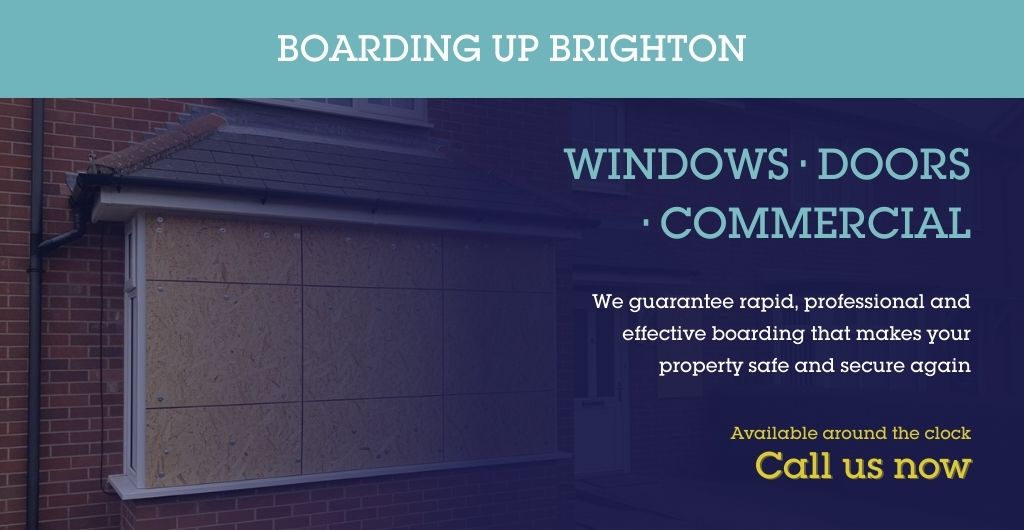
What is Boarding Up in Brighton? (And When Do You Need It)
Boarding up is a practical, temporary way of securing a property when a window, door, rooflight or shopfront has been damaged—or when a building is vulnerable and needs to be made safe quickly. If you’re dealing with a break-in, storm damage, an accident, or a void property between tenants, boarding up helps prevent further loss and reduces the risk of another incident.
At Boarding Up Brighton, we provide boarding up services across Brighton and the wider BN postcode area (BN1–BN88), using proven fixing methods and materials suited to the opening, the building type, and how long you need it secured.
If you’re in an urgent situation, go straight to emergency boarding up or call 01273 092 166.
Boarding up: the plain-English definition
Boarding up means installing robust boards (usually plywood or OSB) over a vulnerable opening to:
- secure the property against unauthorised access
- protect the inside from weather where possible
- reduce the chance of injury from broken glass or loose materials
- give you breathing space until permanent repairs can be arranged
In Brighton, we regularly board up smashed sash windows in Regency and Victorian terraces, ground-floor flat windows, shopfront glazing on busy streets, and rooflights/skylights that have been cracked by wind-blown debris.
It’s not a “nice to have” after damage—it’s often the most sensible first step while you speak to your insurer, landlord, glazing company, or building contractor.
When boarding up is the right option (common Brighton scenarios)
You may need boarding up if any of the below applies:
- Burglary or attempted break-in: damaged doors/frames, prised locks, shattered panes
- Vandalism: bricks through windows, smashed shopfront glass, repeated targeting
- Storm damage: rattling or blown-in panes, loosened frames, rooflights leaking
- Fire damage: windows/doors compromised after the fire service has attended
- Flood damage: swollen timber frames, doors that won’t close securely
- Accidents/impact: vehicle strike, scaffold pole impact, or internal breakage that leaves an opening exposed
If what’s happened to you fits one of those categories, our situation guides can help you understand next steps:
- securing a property after a burglary
- boarding up after vandalism
- storm damage boarding and making safe
- post-fire securing
- flood damage securing
- accident damage boarding up
What boarding up actually involves (our on-site process)
Every job is different, but a professional boarding-up visit usually follows a clear sequence.
1) Quick assessment and safe access
We’ll look at what’s failed—glass, frames, hinges, locking points—and whether there are any hazards (loose shards, unstable panels, overhead risks). In Brighton and Hove, access can be the tricky part: basement flats with narrow lightwells, tall bay windows, or properties on busy roads where loading and parking needs care.
If an opening is too unstable to secure safely without additional work, we’ll explain what’s possible before proceeding.
2) Measure up and choose the right board
We typically use:
- 18mm exterior-grade plywood for most ground-floor windows/doors and higher-risk areas
- 12mm OSB for smaller or lower-risk openings (where appropriate)
The choice depends on the size of the opening, exposure to wind and rain (coastal Brighton can be unforgiving), and whether the property will be unattended.
3) Fixing method: secure, and suited to the frame
We use different methods depending on what we’re fixing into:
- Reveals/brickwork: for solid masonry surrounds
- Timber frames: where suitable and stable
- Anti-tamper fixings: important if the board could otherwise be removed from outside
Where possible, we aim for secure, tidy boarding that doesn’t create extra damage—but if the frame is already splintered or crumbling, non-destructive fixing may not be realistic. We’ll talk you through options on site.
4) Finishing checks (security and safety)
Before leaving, we check:
- the board is tight and resistant to levering
- sharp edges and loose fragments are addressed where safe to do so
- the property is left in a secure state (as far as the damage allows)
5) Documentation for your records/insurer
If you need it, we can provide clear job documentation, which typically includes:
- a written description of what was secured and how
- time-stamped photos before and after
- an itemised invoice and work statement
We’re not loss adjusters and can’t advise on policy terms, but this paperwork is often what insurers request. See our guidance on insurance claims support.
Types of boarding up (and which service you actually need)
“Boarding up” is often used as a catch-all phrase. In practice, there are several service types depending on the opening and risk.
Window boarding
The most common call-out: a cracked pane, smashed sash, broken bay window, or vulnerable ground-floor glazing. Learn more about window boarding in Brighton.
Door boarding (and temporary steel doors)
If a door has been kicked in or the frame has failed, boarding can secure the opening short-term. For properties that need access while remaining secure—especially vacant buildings—a temporary steel door can be a better solution. See door boarding up.
Shopfront boarding
Retail and hospitality sites often need larger panels and stronger fixings—especially where there’s footfall and visibility. If your glazing has gone on a busy frontage, shopfront boarding is designed for commercial realities.
Roof and skylight boarding
Overhead openings are exposed to weather and can become dangerous quickly. Access and waterproofing are key considerations. Read about roof boarding.
Temporary fencing (when the boundary is the issue)
Sometimes the opening isn’t the main risk—an insecure perimeter is. For storm-damaged hoardings, unsafe garden boundaries, or building sites, temporary fencing can be the right call.
What boarding up does (and doesn’t) do
Boarding up is effective, but it’s important to understand its role.
Boarding up helps you:
- secure the building quickly after damage
- reduce the risk of repeat burglary or opportunistic entry
- limit weather exposure until glazing/repairs happen
- show your insurer you acted to prevent further loss (mitigation)
Boarding up doesn’t:
- replace proper glazing, joinery, or structural repairs
- remove smoke odours or fully remediate fire damage (we secure the property)
- guarantee a property can’t be broken into—nothing can—but it does make access much harder and less attractive
If you’re unsure whether boarding is necessary, you can call and describe what’s happened. If we think there’s a simpler or safer alternative, we’ll tell you.
How long does boarding up last?
It depends on why it’s been installed and what’s planned next.
- Short-term: to make safe overnight or over a weekend until glazing arrives
- Medium-term: while an insurance claim progresses or contractors are scheduled
- Void properties: longer periods often need a more robust solution than basic timber boards
If the building is going to stand empty, take a look at vacant property boarding so you can compare options.
Is boarding up covered by insurance?
Often, boarding up can be covered when it’s necessary due to an insured event (such as burglary, vandalism, storm, or impact)—but policies differ. The practical steps that usually help are:
- report incidents to the police where relevant and keep the reference number
- take photos (if safe) before anything is moved
- call your insurer early and ask what documentation they need
- keep all invoices and written job notes
More detail is available on our insurance claims guidance.
Boarding up for different property types in Brighton & BN
Brighton’s building stock is varied, and the right approach changes depending on what you’re securing:
- Residential: flats and houses often need discreet, secure boarding that considers neighbours and shared access—see residential boarding up
- Commercial: shopfronts, offices and hospitality sites may need out-of-hours support, stronger panels, and a clear method statement—see commercial boarding up
- Vacant properties: longer-term protection and repeat targeting can be an issue—see vacant property solutions
What to do right now if you’ve got a broken window or door
- Make sure everyone is safe—avoid broken glass and unstable frames.
- If there’s a crime in progress, call 999. If it’s already happened, report it and keep the reference.
- Take a few photos for your records (only if safe).
- Call us and explain what’s happened: window/door/roof, ground floor or upper floor, and whether the property is occupied.
- Contact your insurer/landlord/agent once the immediate security risk is under control.
If you need urgent help, use 24 hour emergency boarding up in Brighton.
FAQs about boarding up in Brighton
How much does boarding up cost in Brighton?
Costs depend on the size and number of openings, access (for example, upper floors or awkward bays), materials required, and the fixing method. We don’t publish fixed prices because no two jobs are the same—see pricing for the factors that affect quotes.
How long does boarding up take?
A straightforward window can often be secured quickly once we’re on site, but larger shopfronts, multiple openings, difficult access, or badly damaged frames take longer. We’ll talk you through what we can see when we arrive.
Can you board up a property after a burglary tonight?
If you’re dealing with a break-in and need the building secured out of hours, we can help. Start with emergency boarding up or call 01273 092 166.
Will boarding up damage my window frame or brickwork?
We use appropriate fixings for the surface and aim to avoid unnecessary damage. However, if the frame is already compromised—or if the only secure fixing points are structural—some additional fixing marks may be unavoidable. We’ll explain this before proceeding.
Do landlords and managing agents use boarding up?
Yes. We regularly assist landlords, letting agents, and facilities teams to secure voids, failed doors, and vulnerable windows between tenancies. If you’re arranging on behalf of someone else, it helps to have access details and the site contact ready.
Ready to get started?
If you’re not sure whether you need boarding up or which option fits your property, we’ll help you make a practical call based on the damage, location, and risk.
Ready to get started? Call 01273 092 166 or email us for a free, no-obligation quote.
